Getting to know Sa Pa
Up in Lao Cai province, close to the Chinese border, the French built themselves a hill station in the early 1900s to escape the summer heat of the capital. The town still looks down on the Muong Hoa Valley, where terraces cut centuries ago are worked by hand to this day.
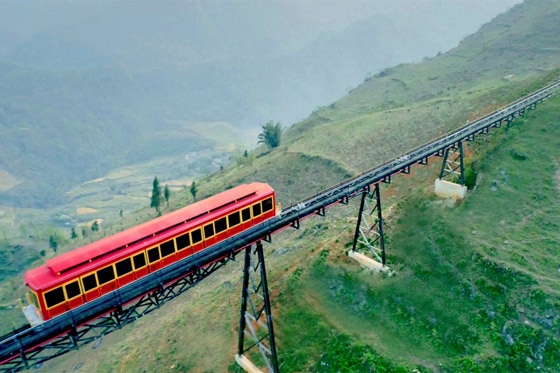
Nothing in Indochina stands higher than Fansipan at 3,143 metres, which is where the nickname 'Roof of Indochina' comes from. Reaching the top no longer means several days on foot — a cable car climbs most of the way — though the trails linking H'mong, Dao, Tay and Giay villages remain the reason most people come.
Getting there means either five to six hours on the road from the capital or a sleeper train up to Lao Cai and a shorter drive from the station; no airline flies in. It is the longest overland stretch in most northern itineraries, so build the trip around it instead of squeezing it in.
Things to do in Sa Pa
Fansipan cable car
A lift most of the way up the country's highest mountain, with enough time to be back down the same morning.
Muong Hoa Valley trek
Guided walks with people from the valley, through the terraces and the villages built among them.
Ethnic minority villages
Time with H'mong, Dao, Tay and Giay families, frequently with a night spent in a village home.
Sa Pa Night Market
Cooking, weaving and the weekend 'love market' that the hill communities still hold.
Silver Waterfall & Love Waterfall
A pair of straightforward waterfall stops along the road up to the Tram Ton Pass.
Cat Cat Village
A H'mong settlement within walking distance of town — the simplest option when the schedule is tight.
Good to know
| Best time to visit | March-May and September-November (clear skies; September-October has the best golden rice terraces); December-February is cold with occasional frost |
| Getting there | About 5-6 hours by road from Hanoi, or overnight train to Lao Cai plus a short road transfer |
| Getting around | Walking, local guides for treks, cable car to Fansipan |
| Elevation | Sa Pa town at roughly 1,500m; Fansipan summit at 3,143m |
| Currency | Vietnamese Dong (VND) |
Trips that include Sa Pa
18D/17N Hanoi, Ha Long Bay, Sa Pa, Hue & more
A longer trip that gives the mountains proper time alongside everything else.
The mountain days can be reordered around Hanoi and Ha Long Bay, or folded into a full north-to-south trip. Send your dates and party size and a day-by-day plan with hotel choices comes back to you.